The short answer
In most Vienna coffee houses you seat yourself at any free table; famous ones like Café Central have a line. Order coffee by name (a Melange is the classic), expect a free glass of tap water, and stay as long as you like. When ready, say "Zahlen, bitte", pay at the table and round up about 5-10% by naming your total.
Why a coffee house has rules at all
In 2011 Viennese coffee house culture was recognized as intangible cultural heritage under UNESCO's program, and it sits on Austria's national list. The listing covers a social practice: you pay for a coffee, and the house lends you a marble table, a newspaper and as much time as you want.
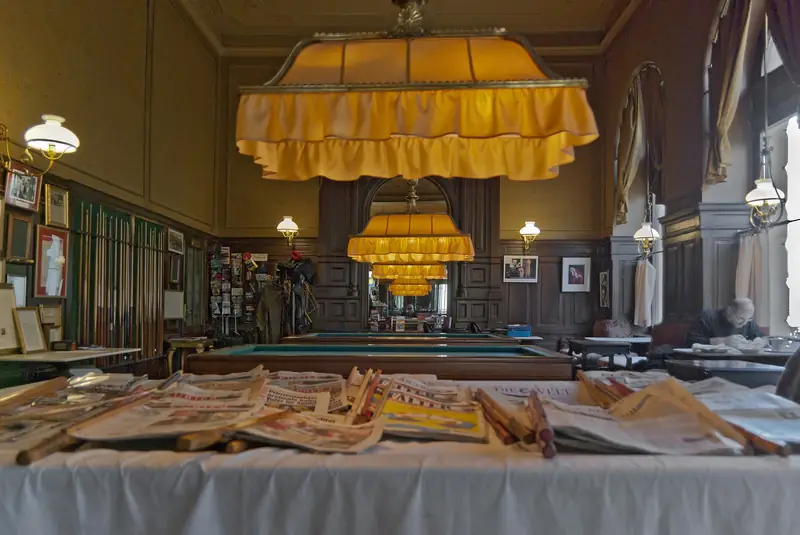
The setting is familiar from photos: marble tabletops, bentwood chairs, upholstered benches, and coffee brought on a small silver tray with a glass of water and a spoon. The habits behind it are less obvious, and most of them are never posted on a wall. Here is how to sit, order and pay without looking lost.
Walking in: seat yourself or wait?
In most traditional coffee houses you walk in, look around and take any free table. Nobody greets you at the door with a menu. A small sign on a table usually marks the Stammtisch, the table kept for regulars, so leave that one alone.
The famous houses in the 1st district work differently. Café Central on Herrengasse often has a line outside for much of the day, and staff walk you to a table when one frees up. Going early in the morning or reserving ahead is the way around it. Newer places that work with reservation slots will also seat you and may give you a time window. The quick test: if there is a rope, a host stand or a line, wait. If there is none, sit down.
When a house is packed, sharing a table with strangers is not unusual.
Getting the waiter's attention
The traditional form of address for a waiter is Herr Ober, a respectful title (Ober also means superior). In practice, the move that works everywhere is to catch the waiter's eye and raise your hand briefly. Calling across the room, waving a menu or snapping your fingers all go down badly.
Viennese waiters have a reputation for being curt. Locals call this mood the Grant. It is part of the house style, so do not take it personally. Service can feel slow by American standards. That is partly the point: nobody is trying to turn your table.
What to order: a short coffee vocabulary
"A coffee, please" will get you a follow-up question. Every coffee here has a name, and ordering by name is the single most useful thing you can learn:
- Melange: a long Mokka with warm milk and a cap of milk foam. Milder than a cappuccino. The default order.
- Einspänner: strong black Mokka in a glass with whipped cream on top. Do not stir it. You drink the hot coffee through the cold cream.
- Verlängerter: a Mokka lengthened with hot water. Closest to an Americano.
- Brauner: Mokka with a dash of milk or cream. Short and strong.
To order, say the name and add bitte: "Eine Melange, bitte." Cake is part of the ritual too: Sachertorte at Café Sacher, or the warm yeast buns called Buchteln, served late in the evening at Café Hawelka.
The glass of water
With a Melange, a Brauner or an Einspänner, a glass of tap water arrives without you asking. You do not order it and it normally costs nothing extra. A quick danke is all it needs.
There is an old detail worth knowing: a spoon laid face down across the top of the glass signals that the water has just been freshly poured.
Newspapers, laptops and staying for hours
Many classic houses keep daily papers clamped in long wooden holders called Zeitungsstöckerl, usually on a rack or a table near the entrance. Take one, read it at your table, and put it back where you found it when you are done. Do not carry a stack to your seat.
Staying a long time on one order is accepted. One Melange buys you the right to sit, read, write or talk well past the last sip. The exception is a house that books tables in fixed slots, where your time ends when the slot does. Laptops are tolerated in most places. If you settle in for half a day, ordering a second coffee or a slice of cake is the polite move.
Paying at the table: "Zahlen, bitte"
The bill does not come on its own. When you are ready, catch the waiter's eye and say "Zahlen, bitte" (the bill, please). You pay at the table, not at a counter, and the waiter settles it on the spot.
Tipping works in a specific way. You add it as you pay by naming the total you want to hand over. If the bill is €4.30, you say "Fünf, bitte" (five, please) and the rest is the tip. Alternatively, hand over a note and say "Stimmt so", which means keep the change. Do not pay the exact amount and then leave coins on the table.
How much? In a café, rounding up is normal, which usually lands around 5-10%. A €3.70 coffee becomes €4. For a full meal with good service, about 10% is the usual mark. Some card terminals now suggest preset percentages; you can always enter your own amount instead.
Sunday in Vienna: cafés open, shops closed
Austrian law keeps shops closed on Sundays and public holidays. The exceptions are specific types of outlets, such as shops in airports and railway stations, theater and museum shops, and airport duty-free. Restaurants and cafés are outside those shop rules, which is why Sunday morning in a coffee house is a local habit. Café Sperl, for one, has live piano music on Sundays.
The practical upshot: buy groceries, snacks and anything you forgot to pack by Saturday evening. If you run out on a Sunday, the shops at Wien Hauptbahnhof and the airport are your best bet.
Getting from Vienna Airport to the city in 2026 and 2027
Read this part carefully, because the usual advice is out of date. From 7 September 2026 to the end of October 2027, ÖBB has closed the core S-Bahn line between Wien Hauptbahnhof/St. Marx and Praterstern for modernization. That cuts the classic airport rail route through Wien Mitte. The S7 now runs only from the airport to St. Marx, where you change to tram 18 or 71. The City Airport Train (CAT) keeps running, but as a coach service between the airport and Wien Mitte. Railjet, Intercity and REX7 trains still run from the airport to Wien Hauptbahnhof.
The airport bus is now sold as Vienna Airport Bus (run by Postbus), with lines to Westbahnhof via Hauptbahnhof, Schwedenplatz, Donauzentrum, Karlsplatz and Praterstern.
| Option | Price (one way) | Time | When it makes sense |
|---|---|---|---|
| Railjet or Intercity to Wien Hauptbahnhof | €5.50 regional ticket | From 14 min | Hotel near Hauptbahnhof or on the U1. The cheapest fast option. |
| REX7 to Hauptbahnhof or Meidling | €5.50 regional ticket | About 20 min to Hauptbahnhof | Same ticket, runs late into the night. |
| S7 to St. Marx, then tram 18 or 71 | €5.50 regional ticket | About 18 min plus the tram | Only if you are staying near St. Marx or along those tram lines. |
| CAT by bus to Wien Mitte | €14.90 (return €24.90), under 15 free | About 21 min, traffic permitting | Hotel in the 1st or 3rd district near Wien Mitte/Landstraße. |
| Vienna Airport Bus | €11 (return €20), children 6-14 €6 | 20-40 min by line | Direct to Schwedenplatz, Karlsplatz, Westbahnhof or Praterstern. |
| Official taxi | Set by the company; ask before you leave | Depends on traffic | Use only the rank in front of arrivals or the City Transfer counters. |
| Pre-booked private transfer | From €65 per car (1-3 people) | Door to door | Late arrivals, kids, heavy luggage, groups. |
For one or two people with carry-on bags, the train is the right answer: €5.50 and under 20 minutes to Hauptbahnhof. If you are staying in Wieden, the 4th district, the Vienna Airport Bus to Karlsplatz drops you at its edge. At the airport, use only the official taxi rank or the City Transfer counters; the airport warns against drivers who approach you in the arrivals hall.
A booked car earns its price in a few situations: your flight lands after the last CAT coach leaves at 23:37, you are traveling with small children, or you have more luggage than you want to haul through a change at St. Marx. ShuttleHero transfers from Vienna International Airport into the city start at €65 per vehicle for 1-3 passengers, a fixed price paid by card in advance. The driver tracks your flight, waits in arrivals with a name sign, and the first 60 minutes after actual landing are free waiting time. Cancel at least 24 hours before pickup and you get a full refund.
This guide contains one link (marked partner) to ShuttleHero, a private airport transfer service run by the same small team as Two Tickets Abroad. If you book through it, the booking goes to our own company. Full disclosure.
Questions people ask
Do I wait to be seated in a Vienna coffee house?
Usually not. In most traditional coffee houses you walk in and take any free table. The exceptions are very popular places such as Café Central, where a line often forms and staff seat you, and cafés that book tables in fixed time slots. If you see a rope, host stand or line, wait.
Is the glass of water free in Vienna cafés?
Yes. In a traditional coffee house a glass of tap water comes with your Melange, Brauner or Einspänner without you asking, and it usually costs nothing extra. You do not need to order it. A quick thank you when it arrives is all the etiquette involved.
How much should I tip in a Vienna coffee house?
Round up, which usually means about 5-10%. Name the total when you pay: for a €4.30 bill, say "Fünf, bitte" and the rest is the tip. You can also hand over a note and say "Stimmt so" (keep the change). Leaving coins on the table after paying is not the local habit.
Can I stay for hours with one coffee?
Yes. Lingering over one Melange to read the papers, write or talk is part of the tradition. If a café books tables in time slots, your time ends with the slot. If you stay half a day with a laptop, ordering a second drink or a slice of cake is the polite thing to do.
What is the difference between a Melange and an Einspänner?
A Melange is a long Mokka topped up with warm milk and a cap of milk foam, served in a cup. An Einspänner is strong black Mokka served in a glass under a layer of whipped cream. You do not stir an Einspänner; you drink the hot coffee through the cold cream.
How do I get from Vienna Airport to the center while the S-Bahn is closed?
Until the end of October 2027, take a Railjet, Intercity or REX7 train to Wien Hauptbahnhof (€5.50, 14-20 minutes), the CAT coach to Wien Mitte (€14.90, about 21 minutes), or a Vienna Airport Bus line (€11). The S7 only runs to St. Marx, where you change to a tram.
Sources we checked
- Austrian National Tourist Office: Kaffeehäuser in Österreich
- Vollpension: Viennese Coffee House Etiquette for First-Time Visitors
- Vienna Würstelstand: Ten things you should know about Viennese coffeehouses
- Visiting Vienna: Café Central
- The Local Austria: When and how much should you tip in Austria?
- Austrian Federal Ministry of Economy, Energy and Tourism: Öffnungszeiten
- ÖBB: Direct links to Vienna city centre (airport folder, September 2026)
- City Airport Train: CAT Airport Bus Vienna (fares and timetable)
- Vienna Airport Bus: Tickets & prices
- Vienna Airport: Taxis & Limousines