The short answer
Ask for "un caffè" (that means an espresso) and drink it standing at the counter, al banco, where it averaged €1.19 in Rome in June 2026. In busy bars you pay at the till first and hand the receipt (scontrino) to the barista. Sitting at a table costs more. Milky coffees like cappuccino are a breakfast habit.
The one word you need: caffè
In an Italian bar, the default coffee is an espresso, and nobody calls it that. Ask for un caffè, per favore and you get a short, strong shot in a small cup. Saying "espresso" will not cause a problem, and the barista will understand you, but "caffè" is the word you will hear from everyone around you.
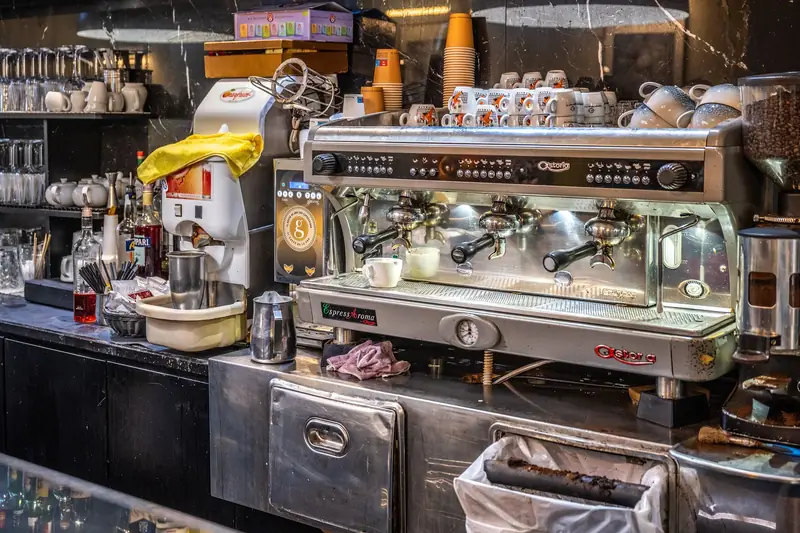
The word "bar" also means something different here. An Italian bar is a café that opens early, serves coffee and pastries all morning, sandwiches at lunch and an aperitivo in the evening. Most of the coffee drinking happens standing up, fast, at the counter.
A few words that trip people up:
- Latte means milk. Order "un latte" and you may get a glass of plain warm milk. Ask for a caffellatte or a latte macchiato instead.
- Americano is an espresso topped up with hot water. It exists, but it is a visitor's drink.
- Doppio is a double shot. Locals tend to order a second caffè later rather than one big one.
Banco or tavolo: the two price lists
Most city bars in Italy work with two prices for the same drink. The price you pay standing at the counter is called al banco. The price you pay sitting down at a table and being served is called al tavolo. Both lists should be on display, usually on a board behind the counter or near the till.
The gap can be small in a neighborhood bar and large on a famous piazza, where a table with a view is part of what you pay for. There is no single legal maximum for coffee in Rome. Bars set their own prices; what Italian consumer law requires is that prices are clearly shown to the customer before you buy.
Two practical rules follow from this:
- If you order and pay at the counter, drink at the counter. Carrying your counter-price cup to a table outside is the classic tourist mistake, and staff may ask you to pay the difference.
- If you want to sit, sit first and wait for someone to take your order. You will pay the table price, and you can stay as long as you like.
In small towns, many bars have one price list and do not mind where you drink. In central Rome, assume two prices until you see otherwise.
How the scontrino system works
In busy bars, especially in train stations, airports and central city cafés, you pay before you order. The sequence goes like this:
- Go to the till (la cassa) and say what you want: "un caffè e un cornetto".
- Pay and take the small receipt (lo scontrino).
- Walk to the counter, put the scontrino down where the barista can see it, and repeat your order.
- Drink, say "grazie", leave.
A sign reading Si prega di pagare alla cassa (please pay at the till) means this system is in use. If there is no separate till and the barista is also taking money, order first and pay on your way out. When in doubt, watch the person in front of you for ten seconds.
Some people leave a coin of 10 or 20 cents on the scontrino when they hand it over. It is a small courtesy, and nobody will chase you for skipping it.
Cappuccino after 11 (and other milk habits)
The cappuccino rule is a habit. No law stops you. Italians drink milky coffee (cappuccino, caffellatte, latte macchiato) with breakfast, usually with a cornetto. By late morning most switch to a plain caffè, and after lunch or dinner almost everyone does. The common explanation is that a lot of hot milk on a full stomach is bad for digestion.
Any bar will still make you a cappuccino at 4 p.m. if you ask, and you will pay the normal price. You will simply be the only person in the room drinking one. If you want milk in the afternoon and want to blend in, order a caffè macchiato: an espresso "stained" with a spoonful of foam.
Ordering a cappuccino with a plate of pasta, or at the end of a restaurant dinner, is the one combination that reliably gets a raised eyebrow.
A short coffee menu, translated
- Caffè: a single espresso.
- Caffè ristretto: a shorter, stronger shot.
- Caffè lungo: a longer pull with more water through the coffee.
- Caffè macchiato: espresso with a little milk foam.
- Latte macchiato: a glass of hot milk with espresso poured in.
- Caffè corretto: espresso "corrected" with a splash of grappa or another spirit.
- Caffè freddo / caffè shakerato: cold coffee; the shakerato is shaken with ice and served in a cocktail glass, mostly in summer.
- Decaffeinato (often shortened to deca): decaf.
Many bars, especially in the south, put a small glass of water next to your cup. Drinking it before the coffee clears your palate. If none appears and you want one, ask for un bicchiere d'acqua.
Regional names that catch visitors out
Coffee vocabulary changes as you travel, and Trieste is the strongest example. There, a plain espresso is a nero. A capo is an espresso with a little milk foam (what most of Italy calls a macchiato), and a capo in b is the same drink served in a small glass. Ask for a "cappuccino" in Trieste and you are likely to get something close to a macchiato, not the large breakfast cup you know from Rome.
In Lecce and the rest of Salento, summer means caffè leccese: coffee poured over ice with sweet almond milk. In Rome you are on standard ground, so the menu above is what you will see.
What coffee costs in Rome in 2026
Rome is one of the cheaper big cities in Italy for coffee at the counter. According to June 2026 data from the Italian ministry's price observatory, reported by the consumer group Altroconsumo, an espresso at the bar averaged €1.19 in Rome. The same data put Milan at €1.27, Naples at €1.24 and Bolzano, the most expensive city in the comparison, at €1.51. In most of the 19 cities checked, a cup cost between €1.20 and €1.40.
Those are counter prices. A cappuccino costs more than a caffè, and the table price on a well-known square can be several times the counter price. Read the board before you sit down.
Getting from Fiumicino Airport to the center
Rome Fiumicino Airport (FCO) sits on the coast west of the city. These are the realistic options:
| Option | Price | Time | When it makes sense |
|---|---|---|---|
| Leonardo Express train to Roma Termini | €14 per person (4 people: €40 group ticket) | 32 min, nonstop | Daytime arrivals, light luggage, hotel near Termini |
| FL1 regional train (Trastevere, Ostiense, Tiburtina) | €8 per person | varies by station; no Termini stop | Staying in Trastevere or the south of the center, budget trips |
| Airport bus (Terravision, SIT and others) | from €4 online | longest; depends on traffic | Lowest cost to Termini or the Vatican area |
| Official white taxi | €55 flat per car inside the Aurelian Walls | depends on traffic | 2-4 people, no booking, central address |
| Pre-booked private transfer | from €80 per car | depends on traffic | Late arrivals, children, lots of luggage, groups |
The Leonardo Express is the easy default. Trenitalia lists departures every 15 minutes (every 30 at some times of day), with the first train leaving Fiumicino at 05:38 and the last at 23:27. You can pay at the ticket gates with a contactless card or phone, one ticket per card. The FL1 is the cheaper train: €8 to any station inside Rome's Anello zone, but it does not stop at Termini, so check which station is closest to your hotel.
For a taxi, use only the official rank outside arrivals and take a white licensed Rome taxi. The fixed fare to any address inside the Aurelian Walls is €55 per car, supplements and luggage included. Ignore anyone who approaches you inside the terminal offering a ride.
Public transport is the right call for most people who land in daylight with a backpack or a cabin bag. If you land after the last train, travel with small children or car seats, or arrive as a group with big suitcases, a fixed-price car is simpler: ShuttleHero runs Fiumicino transfers from €80 per car for 1-3 passengers (vans for 4-8), paid by card in advance. The driver tracks your flight, waits in arrivals with a name sign and includes 60 minutes of free waiting after you actually land, and you get a full refund if you cancel at least 24 hours before pickup.
This guide contains one link (marked partner) to ShuttleHero, a private airport transfer service run by the same small team as Two Tickets Abroad. If you book through it, the booking goes to our own company. Full disclosure.
Questions people ask
Is it rude to order a cappuccino after 11 in Italy?
No. Any bar will make one and charge the normal price. Italians simply drink milky coffee with breakfast and switch to a plain caffè or a macchiato later in the day. A cappuccino with a meal or after dinner is the order that looks most out of place.
Should I say espresso or caffè in Italy?
Say caffè. In an Italian bar "un caffè" means a single espresso, and it is what locals order. The barista will understand "espresso" too; it simply marks you as a visitor.
Why does coffee cost more at a table in Italy?
Many city bars keep two price lists: al banco for standing at the counter and al tavolo for table service. The table price covers being served and the seat itself, and it can be much higher on famous squares. Both prices should be displayed.
Do I pay before or after ordering coffee in Italy?
In stations, airports and busy city bars you pay first at the till (la cassa), take the receipt (scontrino) and hand it to the barista with your order. In smaller bars you often order first and pay on the way out. Watch the customer ahead of you.
How much is an espresso in Rome in 2026?
Government price data for June 2026, reported by Altroconsumo, put the average espresso at the counter in Rome at €1.19, lower than Milan (€1.27) and Naples (€1.24). Table service and tourist squares cost more.
How much is a taxi from Fiumicino to central Rome?
Official white Rome taxis charge a flat €55 per car between Fiumicino and any address inside the Aurelian Walls, with supplements and luggage included. Use the official rank outside arrivals and ignore drivers who approach you inside the terminal.
Sources we checked
- Trenitalia: Leonardo Express
- Trenitalia: Tariffa 1/TER Fiumicino Aeroporto (fare table)
- SicurAuto: Taxi Roma per Fiumicino e Ciampino, quanto costa nel 2026
- Fanpage: quanto deve costare una corsa in taxi dagli aeroporti a Roma centro
- Terravision: airport bus transfers
- Altroconsumo: Caffè, costa sempre di più (prices by city)
- The Open University: Beginners' Italian, ordering and paying
- Gambero Rosso: The many ways to say coffee in Trieste
- Dissapore: Caffè leccese
- BusinessOnline: listino prezzi obbligatorio